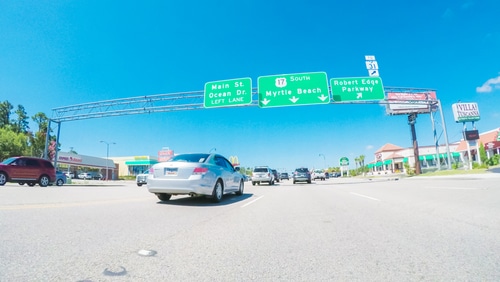
Corridors such as Clements Ferry Road get busy, especially on weekday afternoons, and a commercial vehicle accident attorney will be the first to tell you that a wreck with a delivery driver may involve more than just the person behind the wheel. That’s why these types of personal injury claims can be more complex than a regular car crash case. There may be several insurance policies, several companies, and several people who had a role in putting the vehicle that injured you on the road.
You need a lawyer involved early. Attorney Matthew Breen can find out who controlled the vehicle, whether the driver was working at the time of the wreck, and whether hiring, training, scheduling, supervision, or maintenance helped cause it. If more than one company or policy is responsible, he will pursue every avenue available for compensating you fairly.
Commercial Delivery Vehicles Are Everywhere in the Lowcountry
Delivery traffic in particular has grown throughout the Lowcountry, and Amazon’s warehouse and delivery expansion is a clear example. In June 2025, Amazon opened a new fulfillment center in Summerville to offer same-day deliveries.
Package delivery has become part of everyday traffic in Dorchester, Berkeley, and Charleston counties. More deliveries mean more vehicles on the road, more drivers under time pressure, and more chances for serious wrecks.
These cases may involve delivery vans, box trucks used by companies like UPS, FedEx Ground, and other commercial delivery vehicles listed in the table below:
| Category | Examples |
|---|---|
| Delivery vans and box trucks | Amazon, FedEx Ground, and UPS |
| Courier vehicles | Pharmacy, floral, and document couriers |
| Food-delivery gig vehicles | DoorDash, Uber Eats, and Instacart |
| USPS vehicles | Mail trucks |
The type of vehicle matters, but the bigger question is who was responsible for putting that driver on the road and who can be held liable when someone gets hurt.
Who’s Liable After a Commercial Delivery Vehicle Accident?
 The driver is usually the first person we look at when identifying liable parties. If the driver caused the crash (for example, by speeding, driving distracted, tailgating, or driving while impaired), they may be legally responsible.
But the driver may not be the only party responsible, especially when serious injuries are involved.
Depending on the circumstances, a claim may also involve the driver’s employer, a Delivery Service Partner (DSP), a contractor, the company that owns or leases the vehicle, or another business involved in the delivery operation.
Amazon and companies like it may call the driver an “independent contractor,” but that label does not decide the case. What matters is the real working relationship: who controlled the driver’s work, whether the driver was working at the time of the crash, and what insurance coverage applies.
A larger delivery company may also be investigated if it had substantial control over the delivery operation or contributed to the crash through its own actions. Matthew Breen will determine if unsafe hiring, training, or delivery practices impacted the case.
South Carolina requires minimum auto-liability coverage, but those minimum limits may not fully cover the full cost of serious injuries. Additional commercial or company insurance coverage may be available depending on the delivery operation.
South Carolina’s Rules on Fault and Insurance
After identifying who may be responsible, South Carolina’s fault and insurance rules can affect the compensation you may recover. Here’s what you need to know:
- Comparative negligence: The insurance company may argue you share blame. If you’re deemed more than 50% at fault, you may be barred from recovery.
- Statute of limitations: Most South Carolina injury claims must be filed within three years, though some deadlines are shorter.
- Minimum coverage limits: If the driver was on the clock, the delivery company’s or DSP’s commercial policy (not the driver’s personal policy) may be the one that pays.
- App-based coverage: Coverage for food-delivery drivers depends on the app, the driver’s status in the app, and the policies involved. Coverage may differ when the driver is waiting for an order, driving to a pickup, or actively making a delivery.
- Federal claims process: Claims involving USPS vehicles follow the federal claims process rather than the ordinary South Carolina process. Generally, an injured person must first submit an administrative claim to USPS within two years
More than one policy may apply, and more than one insurance company may be responsible. Unfortunately, they may try to send you down the wrong road before you know what coverage is there. That’s why what you do right after the wreck matters. Protect yourself, get checked out, and let us deal with the insurance companies.
What To Do After a Commercial Vehicle Accident
After a crash, there are steps you can take to protect your health and your claim.
You should:
- Get medical care as soon as possible, even if you don’t know how badly you’re hurt yet.
- Document the vehicle, company markings, license plate, driver information, and anything that shows who the driver was delivering for.
- Refrain from accepting a quick settlement before you know the full extent of your injuries.
- Avoid giving a recorded statement to the insurance company before talking to a personal injury attorney.
You have the right to be compensated for your medical expenses, lost wages, pain and suffering, and other damages resulting from the collision. The sooner a commercial vehicle accident attorney gets involved, the easier it is to preserve evidence, identify the right insurance coverage, and protect your interests from the beginning.
Talk to a Lowcountry Commercial Vehicle Accident Attorney Today
Delivery vans and company trucks move through the Lowcountry every day without incident, until one doesn’t. When that happens, the real work starts with figuring out who’s actually responsible. It’s not just the driver, but also the company behind them and the insurance standing in the way. If you were in a crash involving a commercial delivery vehicle, contact Lowcountry Law for a free consultation to learn what your options look like. The sooner you take action, the more evidence we can preserve.